
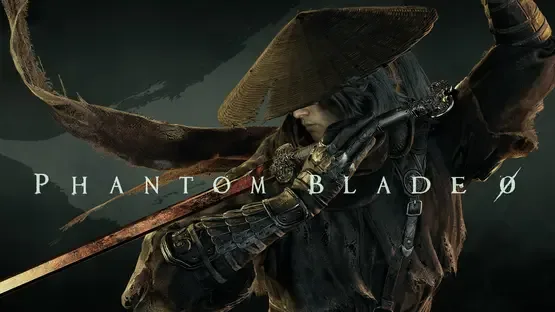
Phantom Blade Zero Review: Spectacular Combat, Forgettable Story
Josh, Ryan and Ace were hyped for Phantom Blade Zero, then got humbled by it. Once the combat clicks, it's a kung fu movie you control, and the story is the one thing holding it back.



We came into Phantom Blade Zero at record hype levels. Josh took time off work to play it, Ace skipped Overwatch nights to stay locked in, and Ryan got more excited the closer launch got. Then the game punched all three of us in the face. If you've heard it's "too easy," we have no idea what those people were playing.
Here's the honest rundown for anyone deciding whether to spend $59.99.
It's not Onimusha, and it's not a Soulslike
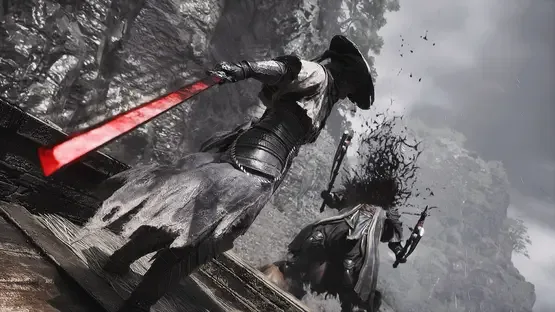
The first thing everyone asks is how it compares to Onimusha, and the answer is that it barely does. Ace's take is that in Onimusha you're the immovable object, parrying and waiting for the perfect opening. In Phantom Blade Zero you're the unstoppable force.
In Onimusha, you are the immovable object. In Phantom Blade Zero, you are the unstoppable force. You are constantly going to be moving around the battlefield, chunking away at that health bar and that stagger bar.
It's also not a Soulslike, and enemies you kill stay dead. We went in worried that would make the world feel empty. It doesn't. The maps are big and full of branching paths, and we all agreed that once you've played it, respawning enemies wouldn't suit this game anyway. The one thing we missed was farming them for currency.
The learning curve is real
Every one of us had a rough first few hours. Josh was three to four hours in, getting his butt handed to him, and honestly wondering if this would be the most disappointing game of the year. Ace had the same whiplash coming straight off Onimusha. The problem was that we were all playing it like a different game.
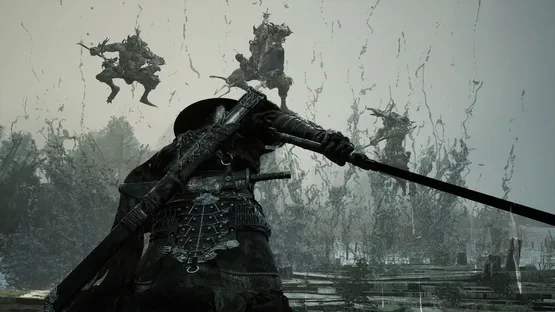
Phantom Blade Zero doesn't want you to wait for your turn. You can input a button at any point, so you should be attacking and blocking nonstop, almost at the same time. You can't just spam, because the game punishes that, and if you sit on the defensive too long a red attack will take a huge chunk of your health. Josh compared the moment it clicked to being Neo seeing the Matrix.
I think that I started out really not vibing with it, and once it started to click and you started to understand how to play it, it made a difference for me big time.
After that, it becomes a dance of swapping blades, parrying, dodging, healing and chaining moves together while your fingers go crazy on the controller.
Weapons, builds and the Sha-Chi bar
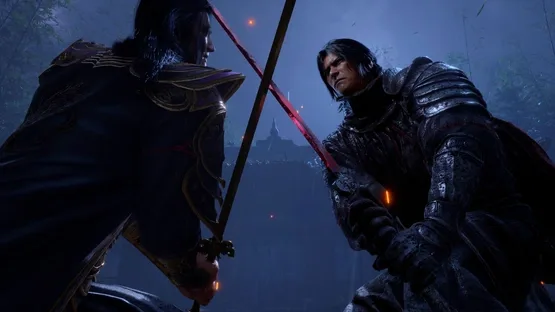
This is where the game really shines. There are somewhere around 55 weapons, and every one has its own animations, power moves and upgrade perks. Even the big two-handers we'd normally skip felt amazing to swing. Ace's way of putting it was Black Myth: Wukong with the weapon variety of Elden Ring.
This is basically playing Black Myth: Wukong with the weapon pool and variety that you would get from a game like Elden Ring.
The Sha-Chi bar is both your power-move meter and your block stamina, so every fight is a resource decision: spend it to dish out damage, or hold some back to survive the next crazy combo. Swapping weapons refills it, which keeps you thinking. Some enemies come at you like a Tasmanian devil, and there are red attacks you have to dodge because you can't block or parry them.
Upgrades are generous too. Weapon upgrades aren't permanent, so you can take your materials back whenever you want and experiment freely. We all said every game should do this. There's a skill tree (more of a skill bush), accessories and relics, and even the notes you pick up give you buffs, so grabbing everything is worth it. You can build a heavy, tanky bruiser or a fast dual-wielding ninja.
Presentation and exploration
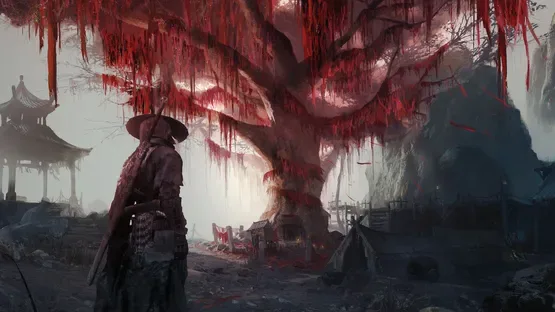
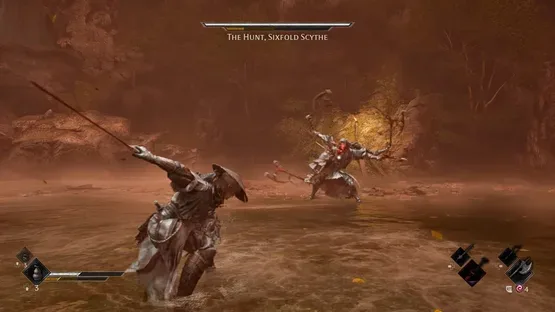
We kept saying it felt like being inside a kung fu movie. The boss intros pull the camera back so you see your opponent standing there facing off with you, and Josh gets chills every time. Some bosses are old masters with long white beards, others are fantastical creatures, and one is a drunk guy on a bridge. A sunset fight in a wheat field around chapter three had Josh sitting still for five minutes just soaking in the scenery and the music.
Exploration is a nice bonus. The levels are big and branching, and Ace says it's very Metroidvania-coded, since new abilities send you back to places you couldn't reach before. We found secrets, trinkets, and optional bosses we could have missed entirely. Ryan didn't feel the pull to hunt everything down, and the music is hit or miss, from weird techno rock to ethereal. Quality-of-life touches are strong, like a shop right at your save bell so you never trek back to a smith.

Difficulty
It isn't too easy. Josh started on the hardest setting, Hell Walker, which was a mistake while learning the combat, and dropped to Pathbreaker for a couple of bosses before moving back up. You can change it at will, and the game even tells you when you've wandered somewhere you're not ready for yet. Ace found the lower setting plenty hard and felt like he was playing base-difficulty Black Myth: Wukong. Either way, it's a fair challenge.
The story is the weak spot
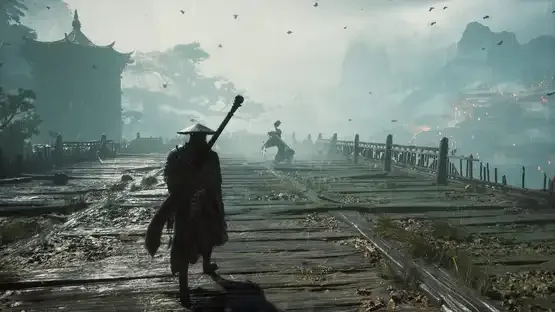
You play as Soul, who has 66 days to find a new heart. Ace told it in about ten seconds, and that's about as deep as it gets. None of us remembered the day counter. A few factions fight over power, someone betrays someone, and you're stuck in the middle. The characters didn't grab us either, and the dialogue is painfully slow, with cutscenes that make you wait out the NPC's animation before you can walk away. The memory sequences are a nice change of pace, and one looked like a Studio Ghibli movie.
Ryan put it best: he would rather have no story at all, like Elden Ring, than sit through a bad one. The funny thing is that we all ended up attached to our weapons instead of the characters.
Price and where it ranks
At $59.99, it's not one of those $70 or $80 games. Everyone agreed the price is fair. Ace did add that if you're torn, spend the extra $10 on Onimusha, because Musashi is a much better character and the whole package is more complete. On our leaderboard it landed at number 33, just above Resident Evil Requiem, and below Disco Elysium and Metal Gear Solid 5. Pretty high praise, considering how many games are on that list.
PC players should plan ahead, too. The shader compilation took us up to two hours, so don't update your graphics driver on launch day like Ryan did.
The VGP take
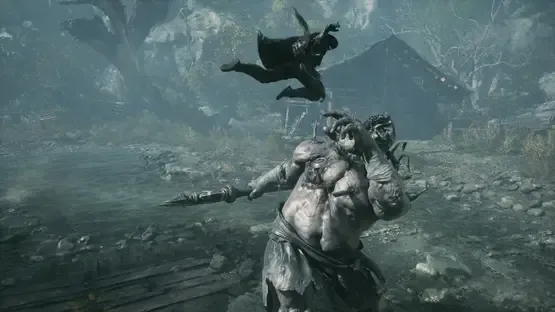
Phantom Blade Zero is a combat spectacle. If you want the flashiest, most in-depth melee system we've seen, with a huge weapon list to keep you chasing the next one, you can't go wrong.
If you want the most insane combat you have ever seen, Phantom Blade Zero might be it.
It isn't a complete package. The story and characters fall short, and it asks you to unlearn habits from other action games before it opens up. Stick with it through those first rough hours, though, and it turns into something special.