
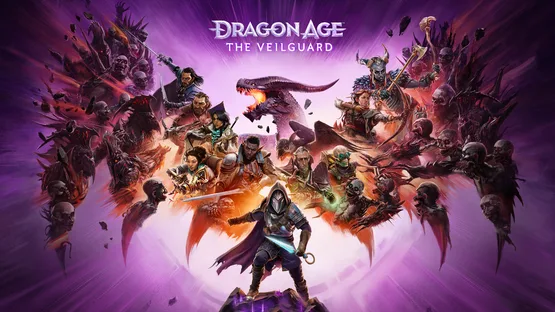
Dragon Age: The Veilguard Review: Mashed Potatoes With No Seasoning
A longtime Dragon Age fan and a total newcomer walk into Thedas. Neither one walks out happy. Gorgeous world, flashy combat, and almost nothing underneath.


We'll say it up front: Dragon Age: The Veilguard did not work for us. We know a lot of people in our community love it. Some are already on their second playthrough, and we love that for you. But we call it like we see it.
We came at it from two directions. Josh loves the Dragon Age series; Origins and Inquisition are some of his favorite RPGs ever. Ryan had never touched the series and went in with zero expectations. We ended up in almost exactly the same place.
I would rather a game just be bad. When you give me glimpses of greatness and then ruin them with terrible design choices, it frustrates me more than if it was just bad.
Everything is "safe"
The thing that stood out most to Josh was how lackluster everything felt. Nothing about the game is daring.
Somebody made mashed potatoes and forgot the seasoning. No butter. Just pureed potatoes. I hope you like potatoes.

The dialogue, the quests, the romance (complete with a giant heart icon so you don't have to think about your answer), the villains: all of it feels designed so nobody could ever be uncomfortable. Josh's word for it is "Disneyfied." For a story about the end of the world, there's no darkness and no hard choices. When you do something awful, the most you get is a pop-up: "Neve disapproves." Then she happily joins you on the next mission. In older Dragon Age games, companions would walk out or even fight you over choices like that.
Rook, the least special hero
In Origins you survive the Joining and become a Grey Warden. In Inquisition a mysterious mark on your hand makes you the only one who can close the rifts. In The Veilguard, Varric gets hurt and tells Rook to lead, because there's nobody else. Rook isn't chosen, doesn't have powers and has no backstory.
I spent time in the character creator making this guy look cool, and all I could think was, "You have no reason to be leading these people."
Ryan had the same reaction to his own Rook. And your companions, who are mostly new characters, sign up for a world-ending mission with a stranger after one conversation. Ryan, our big story guy, never cared about any of them. They just felt like extra buttons in combat.
The art style and the dialogue

When the first trailers dropped, Josh and Paul both reacted with "what is this?" Ryan called it the Fortnite effect, like playing a game full of wax figures. Josh actually warmed up to the art style around hour three. The world is beautiful. Then the characters start talking. The facial animation barely moves. Somebody shouts about dragons attacking their city with a completely calm face. The writing and voice delivery never matched the stakes. A review we watched said it sounded like an HR rep was sitting in on every line, and we couldn't unhear it.
The story tells instead of shows
Josh compares it to God of War, where you learn who Kratos and Atreus are through what happens to them. The Veilguard just tells you. The Venatori are bad. That leader is corrupt. The elven gods are bad because they spread blight, and blight is gross. There's no discovery and no slow reveal, just exposition at the war-table meetings.
Combat: the best part, and still mid
Josh opened his first skill tree and said "Bingo, baby." It's huge, with plenty of builds for rogue, warrior and mage. Then he found out you can only equip three abilities. Your companions get three abilities each too, and you mostly use them to set up detonation combos. The rest is mashing buttons and dodging very telegraphed attacks. Turning up the difficulty just makes enemies spongier. And the enemy variety is weak. Ryan said the robed cultists look like Cobra troopers from '80s G.I. Joe, and a "Fierce Ogre" looks exactly like the last ogre.
This is the best part of the game we're talking about. That's why I was just going from combat to combat to get through the campaign.
Loot
Glowing pouches sit in the middle of every street. Open them and you mostly get crafting materials. Ryan, who usually explores every corner of RPGs, stopped bothering with side paths entirely because he knew the gear wouldn't matter in such simple combat.

Paul weighs in
We asked Paul, the biggest Dragon Age fan we know (Origins is in his all-time top 10), to send in his thoughts. He loves being back in Thedas, and the outdoor visuals and pulsing blight sacs impressed him. But the shiny, polished look takes away the sense of danger the series always had. Some modern-sounding lines ("you really got banged up") break the fantasy, and the combat feels closest to Dragon Age 2, his least favorite.
The pitch for it
Ryan says it's not a bad game, it's just not a good one. If it's your first RPG and you like the look, simple combo-driven combat could work for you. Josh calls it easy to digest: a comfort game you can play without thinking too hard. There's a real audience for that.
The VGP take
Josh gave it a 6.1:
In my heart this game is a one. But I'm trying to mature as a gamer. It's a decent video game overall. It's also thoroughly mid. Get it on sale.
Ryan gave it a 6.5, a little above No Rest for the Wicked. He liked the combat more than Josh did and thinks the world is beautiful, but the rest pulled it down.
It's not a recommend from us. Check out other reviews too, because plenty of people disagree with us. And if you love it, enjoy it. We're going to go play S.T.A.L.K.E.R. 2.