
End of Abyss Review: A Dark Descent Worth Surviving?
A punishing twin-stick shooter meets Metroidvania exploration in a haunting sci-fi adventure. End of Abyss nails the atmosphere, but damage-sponge bosses, frustrating resource management, and inconsistent combat mechanics make this descent harder than it needs to be.
 AceBy Ace
End of Abyss is a dark sci-fi action-adventure that blends twin-stick shooter combat with Metroidvania-style exploration. Developed by Section 9 Interactive, it throws you into a mysterious underground facility filled with strange creatures, interconnected environments, and plenty of reasons to be nervous about what’s around the next corner.
After spending several days cracking away at this one, I’ve beaten the game and even managed to unlock its secret ending. Despite some frustrating moments, I’ve had a great time with it. There’s a lot to like here, especially if you’re someone who enjoys a challenge. Just be prepared, because this game does not mess around.

What is it?
End of Abyss is a twin-stick shooter with Metroidvania elements. You’ll use one stick to move and the other to aim, taking on hostile creatures while exploring a mysterious underground facility. As you progress, you’ll uncover new areas, collect resources, upgrade your weapons, and gradually push deeper into the unknown.
The Metroidvania side comes through in the exploration and the way the facility opens up as you progress. You’re encouraged to investigate your surroundings, discover new paths, and revisit areas as you become better equipped to deal with the dangers waiting for you.
Combat, meanwhile, demands that you keep moving, aim carefully, and learn enemy attack patterns. You’re not some unstoppable action hero mowing down everything in your path. You have to pay attention, manage your resources, and make every encounter count.
That combination of exploration and challenging combat is a big part of what makes the game work. There’s a satisfying sense of discovery as you uncover more of the facility, and the twin-stick shooting gives encounters a more direct, hands-on feel.
The problem is that some of the systems surrounding that combat don’t always work as well as they should, especially when the game starts throwing its toughest encounters at you.

The atmosphere is immaculate
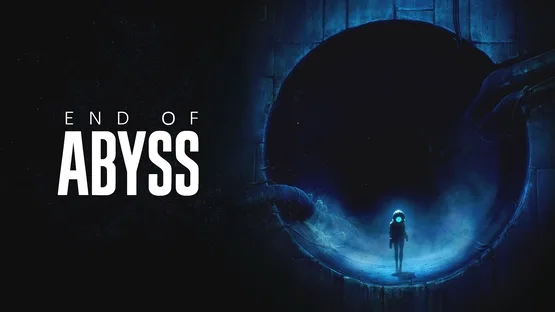
One of my favorite things about End of Abyss is the overall vibe. The environments are dark, unsettling, and filled with the kind of sci-fi horror imagery that makes exploration feel genuinely tense. You’re constantly moving through unfamiliar spaces, wondering what you’ll discover next, and the game does a great job of making its world feel hostile.
There’s something especially satisfying about pushing into a new area, uncovering another part of the facility, and gradually piecing together what’s going on. Exploration feels worthwhile, and the atmosphere gives you plenty of reasons to keep moving forward, even when the combat starts testing your patience.
Everything contributes to that feeling of isolation and danger. It’s the kind of game where the atmosphere can carry an encounter before an enemy even appears on screen. You’re already on edge, and then something decides it’s time to ruin your day.
For me, this is where End of Abyss really shines. The world has me invested enough that I genuinely want to see what’s waiting around the next corner, even when I know there’s a decent chance something is about to kick my butt.

A challenge that doesn’t pull its punches
Let’s get one thing straight: End of Abyss is HARD. If you’re looking for a game you can breeze through without much resistance, this probably isn’t the one for you.
I enjoy a good challenge, and there’s definitely satisfaction in learning enemy patterns, improving your approach, and finally overcoming an encounter that’s been giving you trouble. But I think there’s a difference between a boss being difficult and a boss simply taking forever to kill.
My biggest complaint is that some of these bosses feel like enormous damage sponges. Their movesets can be relatively limited, so the challenge doesn’t always come from learning an elaborate set of attacks or adapting to constantly changing phases. Instead, you’re repeating the same patterns and avoiding the same attacks for what feels like an eternity, hoping you don’t make a mistake before that health bar finally disappears.
And because these fights can go on for so long, even a small mistake can be incredibly frustrating. You might spend several minutes executing a pattern correctly, get clipped near the end, and have to do it all over again.
The game also has invincibility frames, or I-frames, that are supposed to give you a brief window of protection when dodging certain attacks. The problem is that, from my experience, they don’t always feel consistent. There are moments when a dodge feels like it should have avoided damage, only for me to get hit anyway.
Now, maybe I’m mistiming certain dodges, and I’m not going to pretend every hit is the game’s fault. But when you’re already dealing with punishing bosses and long encounters, it can be difficult to tell whether you made a mistake or whether the dodge simply didn’t work the way you expected.
That makes the difficulty feel less satisfying than it should. I want a challenging game to test my reactions and decision-making, but I also want to feel confident that when I execute a mechanic correctly, the game will respond accordingly.

The weapon and resource problem
Another area where I have some issues is the weapon system and how the game handles its resources.
You have access to more than just your trusty pistol, and having different weapons available sounds like it should encourage experimentation. The problem is that ammunition for those other weapons isn’t something you can freely replenish by defeating enemies. Instead, enemies drop scrap fragments, which you can use to craft ammunition at benches found in save rooms.
Here’s where things get annoying those same scrap fragments are also used to upgrade your weapons or make tools you need for exploration.
So every time you’re considering crafting ammunition, you’re essentially deciding whether you want to spend resources on having more firepower now or improving your equipment for the long term. Resource management can be a great mechanic, but in this case, it often makes the alternative weapons feel less appealing than they should.
Why spend valuable scrap crafting ammunition when I could save it for upgrades and just use the pistol, which has unlimited ammo?
That becomes an especially frustrating question when you’re facing bosses that already take a long time to bring down. I want to experiment with the weapons the game gives me, but the resource economy makes doing so feel like I’m actively working against my own progression.
I understand wanting players to think carefully about how they use their resources, but when one weapon has unlimited ammunition and the others require materials that could be put toward upgrades, the pistol starts feeling like the obvious choice rather than one option among several.
It’s a shame, because I want to use the full arsenal. I just don’t always feel like the game gives me a good enough reason to do so.
How many enemies does one door need?
Another thing that starts to wear on me is how often the game locks doors until you’ve killed every enemy in an area.
Don’t get me wrong, combat encounters are an important part of the experience, and I understand wanting to put obstacles between the player and the next area. But when the solution is repeatedly to enter a room, kill everything inside, and wait for the door to open, the formula starts feeling a little too familiar.
It can interrupt the flow of exploration, which is one of the strongest parts of the game. I’ll be enjoying the atmosphere, checking out a new environment, and looking forward to seeing what’s around the next corner, only to find myself stuck in another arena encounter that I have to clear before I can continue.
And because the combat can already be so punishing, these encounters aren’t always quick detours. They can turn into drawn-out battles that drain resources and slow the pace down even further.
This is where I think the game could benefit from a little more variety. Not every locked door needs to become a combat challenge. Give me some environmental puzzles, some exploration-based obstacles, or something that makes me think differently instead of just throwing another room full of enemies at me.
The combat is an important part of End of Abyss, but when it’s used as the solution to so many obstacles, it starts to lose some of its impact.

The verdict
End of Abyss is a dark, atmospheric sci-fi adventure that gets a lot right. Its twin-stick shooter combat gives encounters a direct, hands-on feel, while its Metroidvania-style exploration makes the world rewarding to investigate. The atmosphere is fantastic, and there’s something genuinely compelling about pushing deeper into a place that feels as dangerous as this one.
However, the boss design can lean too heavily on enormous health bars rather than interesting mechanics, the dodge I-frames don’t always feel consistent, and the resource economy discourages me from experimenting with the full range of weapons. Add in the repeated encounters that require you to kill every enemy before progressing, and the experience can become more frustrating and repetitive than it needs to be.
Despite those frustrations, End of Abyss kept me invested all the way to the end, and unlocking the secret ending gave me another reason to see my journey through. The exploration and atmosphere are strong enough to carry the experience, even when some of the combat mechanics get in the way.
I’m giving End of Abyss a 7.5 out of 10. It’s an enjoyable experience with fantastic atmosphere and rewarding exploration, but a few combat and resource management decisions hold it back from being something truly special.
If you’re a fan of challenging twin-stick shooters and Metroidvanias, there’s plenty here to enjoy. Just be prepared for some frustrating boss fights along the way.